

2026 Research Report by
The Hidden Crisis
Introduction
Caregiving is already affecting your workforce and the families you serve, and most of it goes unreported. Our new study shows where it stays hidden and what employers and financial institutions can do about it.
Three in four caregivers in our study are also in paid work. They give an average of 19 hours of care a week, yet most don’t call it caregiving, don’t raise it with their employer and don’t look for support. For organizations, that means a real impact on work, wellbeing and financial decisions that’s easy to miss.
What the research covers
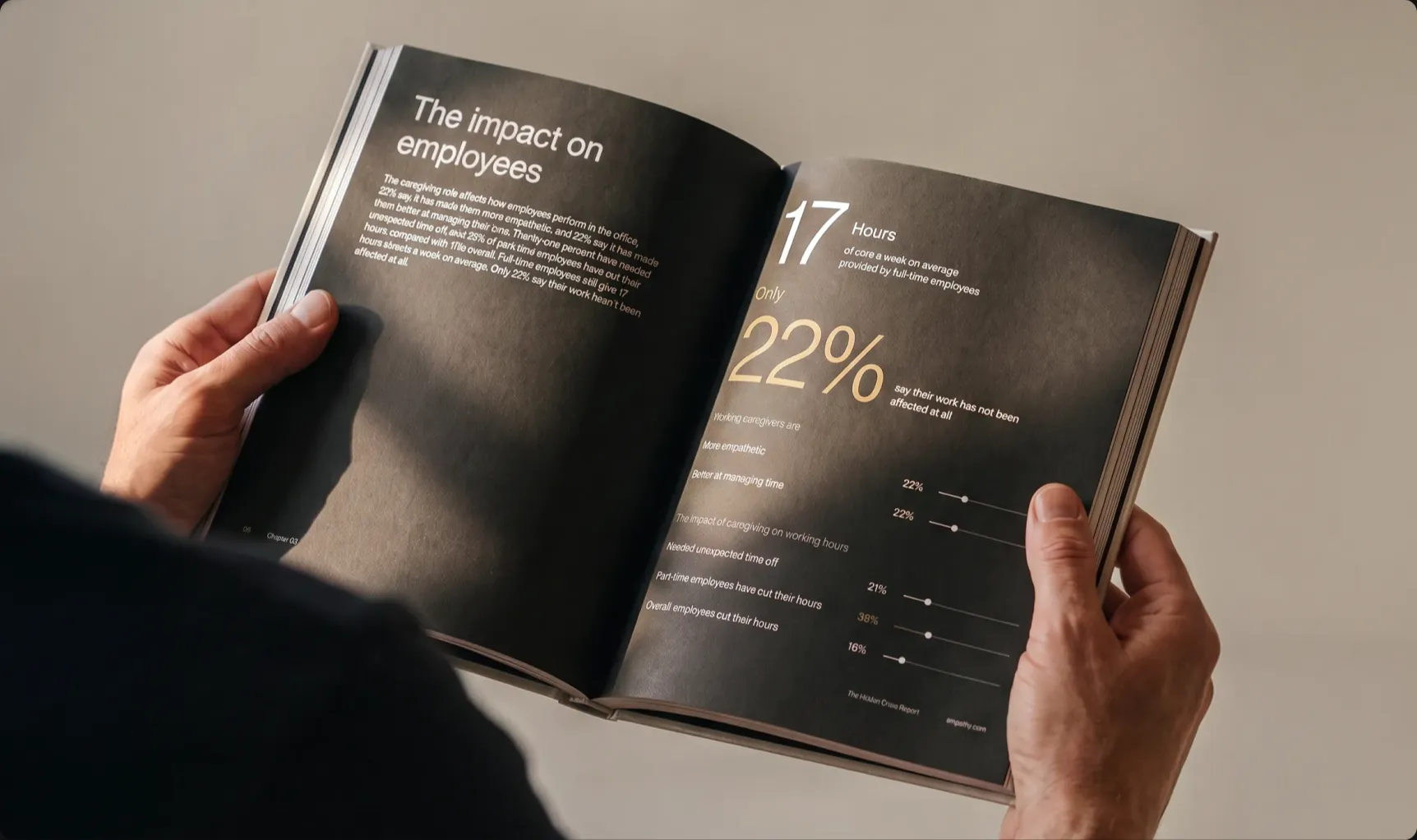
The impact on work
Unexpected time off, reduced hours and why employees hold back.

The scale of hidden care
Hours given, types of care and who people are caring for.
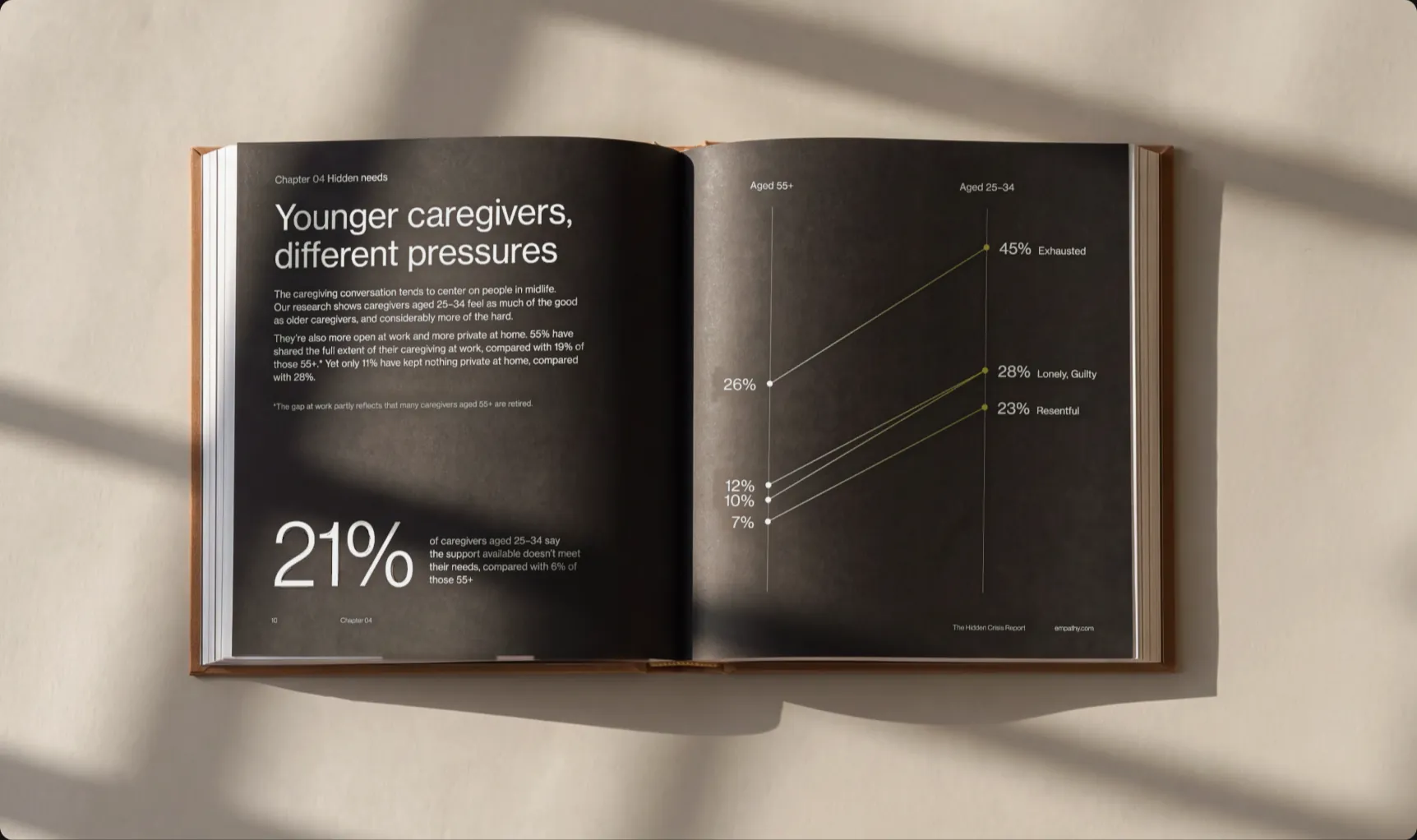
Where pressure is highest
Why caregivers aged 25–34 are struggling more than older caregivers.
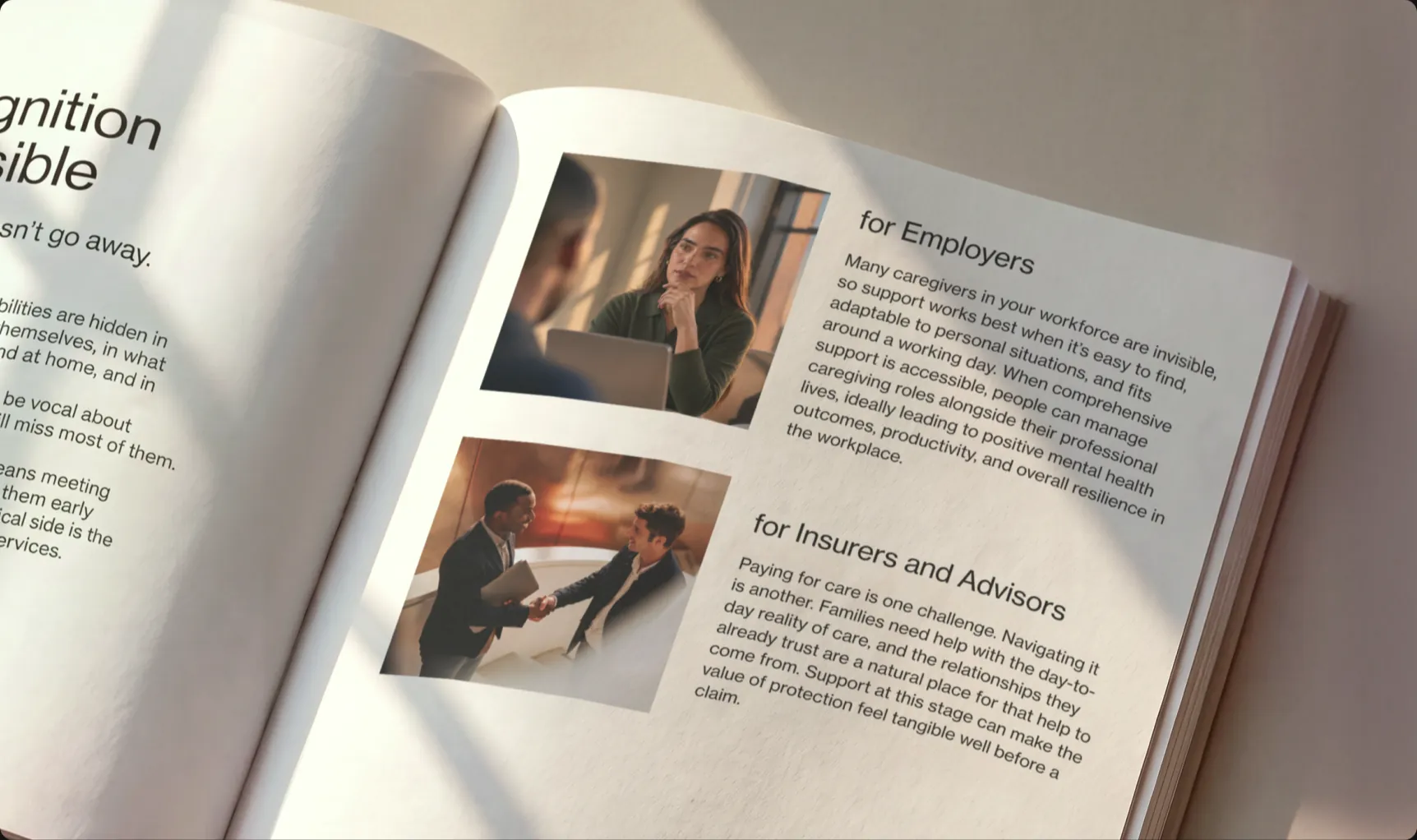
What to do next
Recommendations for employers, insurers and advisors.


“This is a paradigm change,
and we are not ready.”
 Dr. Terry Fulmer, PhD, RN, FAANEmpathy Caregiving Expert; Former President,
The John A. Hartford Foundation
The benefits of support that reaches caregivers early

For employers
21% of working caregivers have needed unexpected time off, and 30% of part-time employees have cut their hours. Support that’s easy to find and fits around the working day can help people stay well and keep working.

For financial institutions
Families need help navigating care, not just paying for it. Support at this stage creates a meaningful reason to engage before a claim and can make the value of protection feel tangible.

Care that goes unseen doesn’t go away, it goes unsupported.
Bring caregiving support to your people
Talk with our team about how Empathy helps employees, policyholders and families with the practical and emotional sides of care.